Chamomile
Family: Asteraceae
Scientific name: Matricaria chamomilla
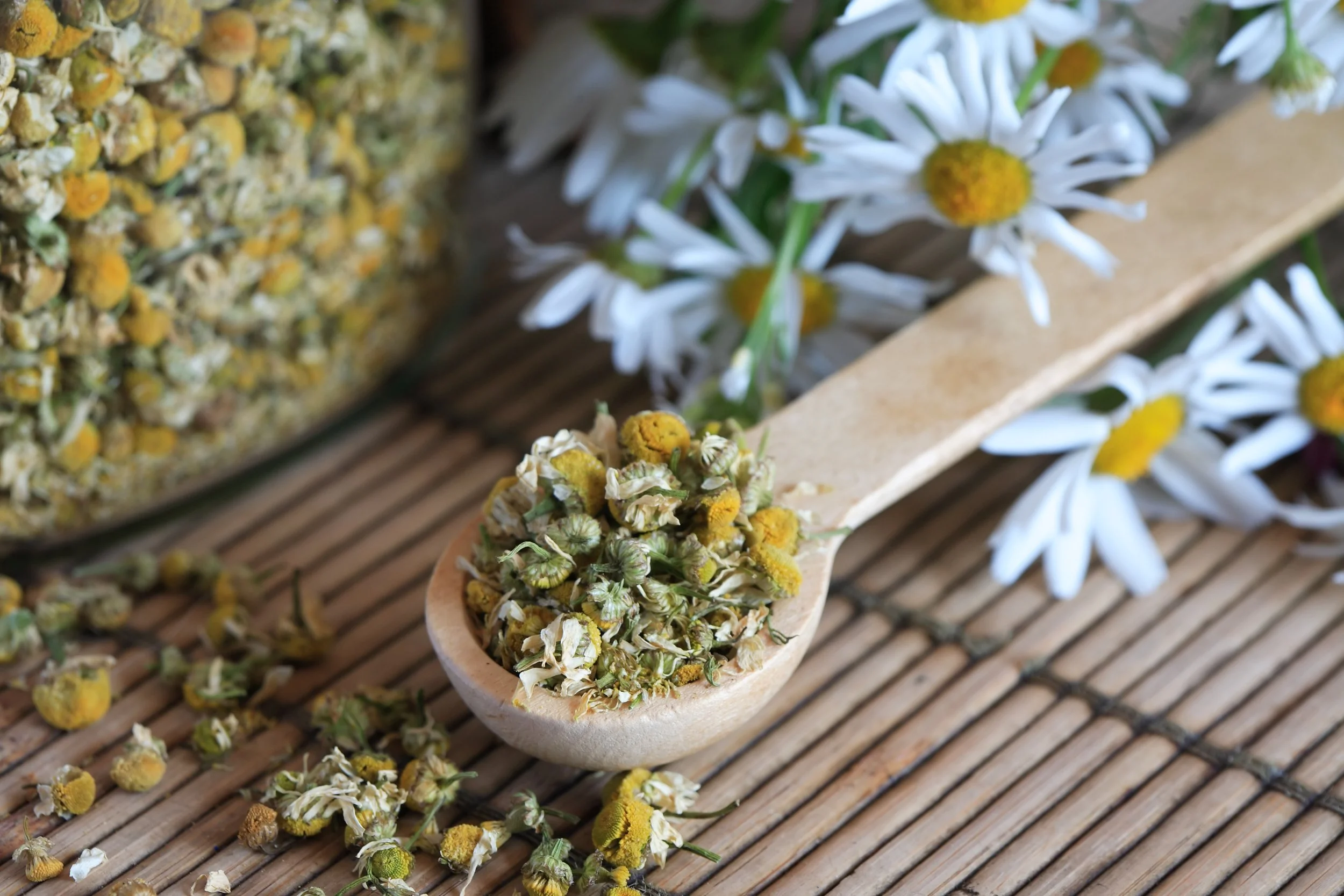
Parts used: Flower heads
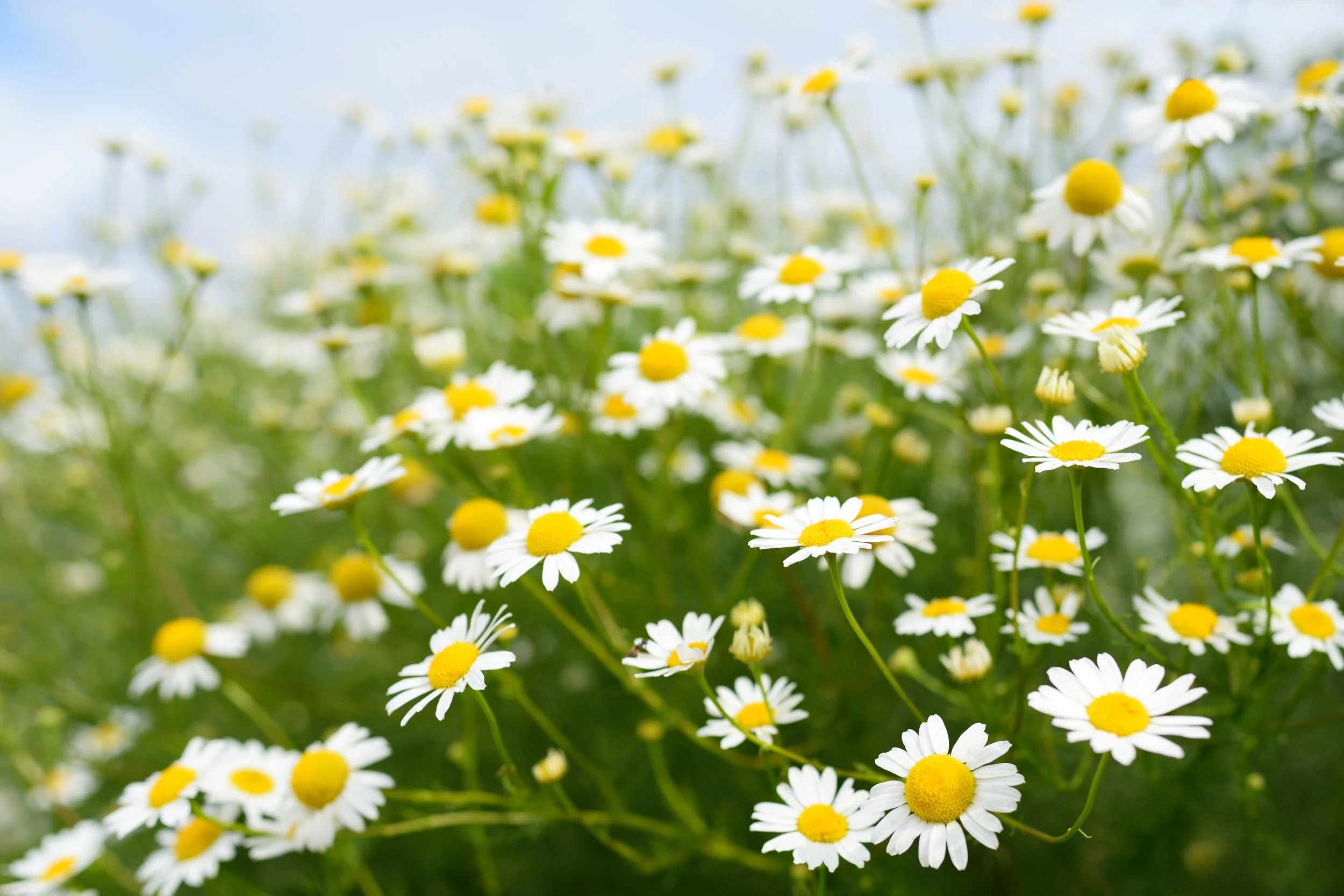
Chamomile is a low-growing annual native to Europe and Western Asia, now widely cultivated. It prefers sunny positions and well-drained soil. The plant has finely divided leaves and small daisy-like flowers with white petals and a hollow, conical yellow centre.
Key constituents include volatile oils (notably bisabolol and chamazulene), flavonoids, and coumarins. Traditionally, chamomile has been used as a gentle digestive, calming nervine, and skin-soothing herb.
Actions: Carminative, mild sedative, anti-inflammatory, antispasmodic
Indications: Digestive discomfort, nervous tension, restlessness
Safety: Very safe for most people; avoid if allergic to plants in the daisy family.